Scaling Smart: The Hard Realities and Essential Lessons of Franchising Your Business
Scaling Smart: The Hard Realities and Essential Lessons of Franchising Your Business
Deciding whether to scale a business through franchising is one of the most pivotal choices an entrepreneur will ever face. While the model offers massive potential for exponential growth, evaluating your true "franchiseability" requires looking beyond basic expansion desires to rigorously audit your core fundamentals, readiness, and capital. Consider this your definitive guide to the essential takeaways every founder must master before transforming their business into a franchise system.
Takeaway 1: Franchising Is Replicating Success, Not Just Expanding Brand Reach
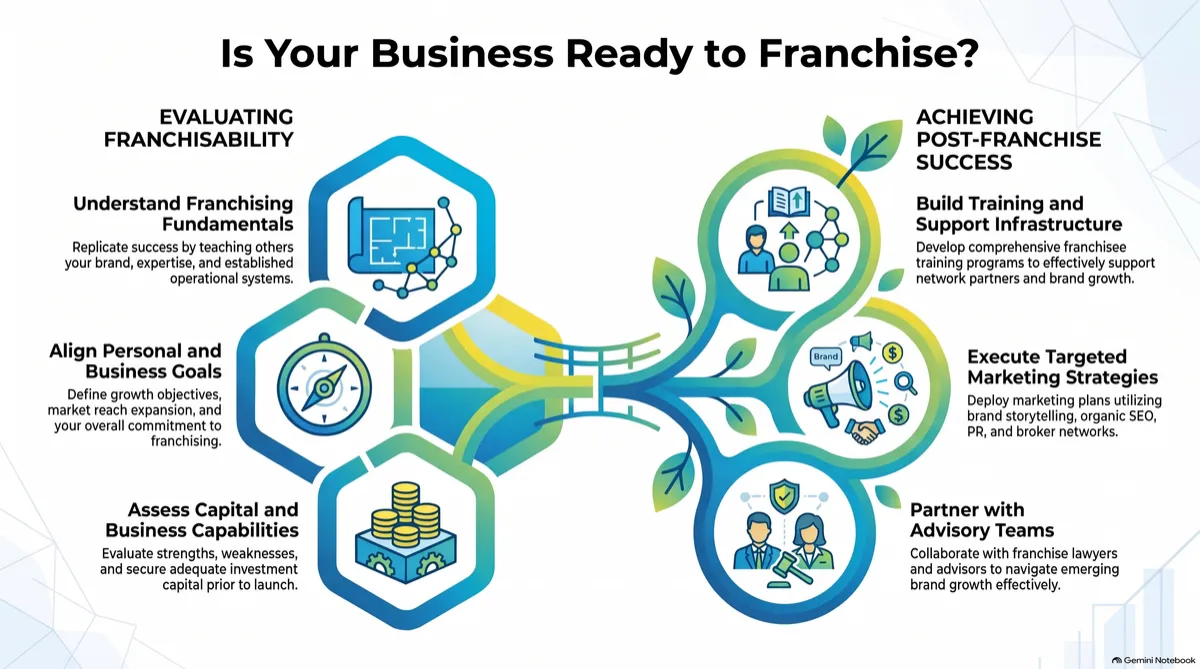
At its core, understanding the fundamentals of franchising means recognizing that it is not merely a tool for geographic expansion. Franchising is fundamentally about taking the things that have worked for you—your name, your brand, your expertise, and your systems—and teaching others how to replicate your success. While identifying your business goals often begins with a desire to broaden market reach, real scale requires translating your institutional knowledge into standardized training and support systems that allow new operators to mirror your operational achievements.
As you evaluate your long-term vision, you must determine whether you are truly ready to build the infrastructure necessary to back independent operators. Viewing franchisees not as mere buyers, but as partners who will become an extension of your brand, fundamentally changes how you approach systems building. When external partners represent your business identity in new markets, every operational blueprint must be meticulously structured to ensure they can mirror your proven success.
Takeaway 2: The Silent Killer of Emerging Brands: Inadequate Preparation and Capital
A crucial step in assessing your business readiness is coming to terms with the actual costs of franchising. Launching and sustaining a scalable model requires upfront capital and targeted financial investments to establish legal foundations, build operational systems, and fund long-term growth. Failing to accurately evaluate these costs before launching leaves a brand structurally vulnerable before it even grants its first territory.
Without the right capital and investments, you cannot succeed in any business or industry—and franchising is no different.
Far too many emerging brands venture into franchising without adequate preparation or realistic financial reserves. Skipping the necessary foundational prep work and underfunding the business model prevents franchisors from properly supporting their network, triggering operational breakdown long before the brand can gain traction in the market.
Takeaway 3: You Can't Scale Alone—The Crucial Role of Advisory Teams and Specialists
Transitioning from a single business owner into a franchisor requires assembling a dedicated support structure of industry specialists and advisors. Engaging directly with an experienced advisory team gets an emerging brand in front of the curve in its market, allowing founders to anticipate growth hurdles rather than react to them. Beyond internal strategy, prospective franchisors must proactively consult with specialized franchise lawyers to audit business strengths and weaknesses, network with seasoned franchise professionals, and immerse themselves in industry trade shows, conferences, and educational events.
Emerging leaders who attempt to scale in isolation risk falling behind before their model takes off. Ultimately, franchise success extends far beyond mere planning and execution—it relies heavily on associating with trusted advisors who elevate the business. Aligning with specialized attorneys, brokers, and consultants provides the elite backing required to navigate legal complexities, vet opportunities, and scale with confidence.
Takeaway 4: Post-Franchise Success Demands Heavy Investment in Support and Marketing Systems
What happens after you launch your franchise program dictates your long-term viability. As a franchisor, your role shifts toward continuous learning, active brand promotion, and driving market demand. To protect your brand, you must systematically invest in infrastructure and support systems designed to train franchisees, empowering them to run successful operations that ultimately build collective brand equity.
Sustaining a high-performing network requires combining continuous franchisee education with a multi-channel promotional strategy. A comprehensive post-launch marketing and support blueprint relies on several essential pillars:
Brand story and PR to build market credibility and public trust
Professional marketing materials customized for franchisee recruitment
Organic SEO to establish long-term digital authority and lead flow
Franchise brokers and broker organizations to connect with qualified prospective buyers
Comprehensive franchisee training programs to guarantee system-wide operational consistency
Conclusion: Are You Ready to Evaluate Your Franchiseability?
Evaluating your franchiseability demands an honest, open-minded audit of your strengths, weaknesses, personal goals, business objectives, and financial capital. By analyzing these critical elements and engaging in transparent discussions with a franchise lawyer and trusted advisors, you can clearly determine whether franchising is the right vehicle to achieve your ultimate vision. Are your current business systems, brand identity, and internal expertise structured so flawlessly that an independent operator could seamlessly replicate your success?